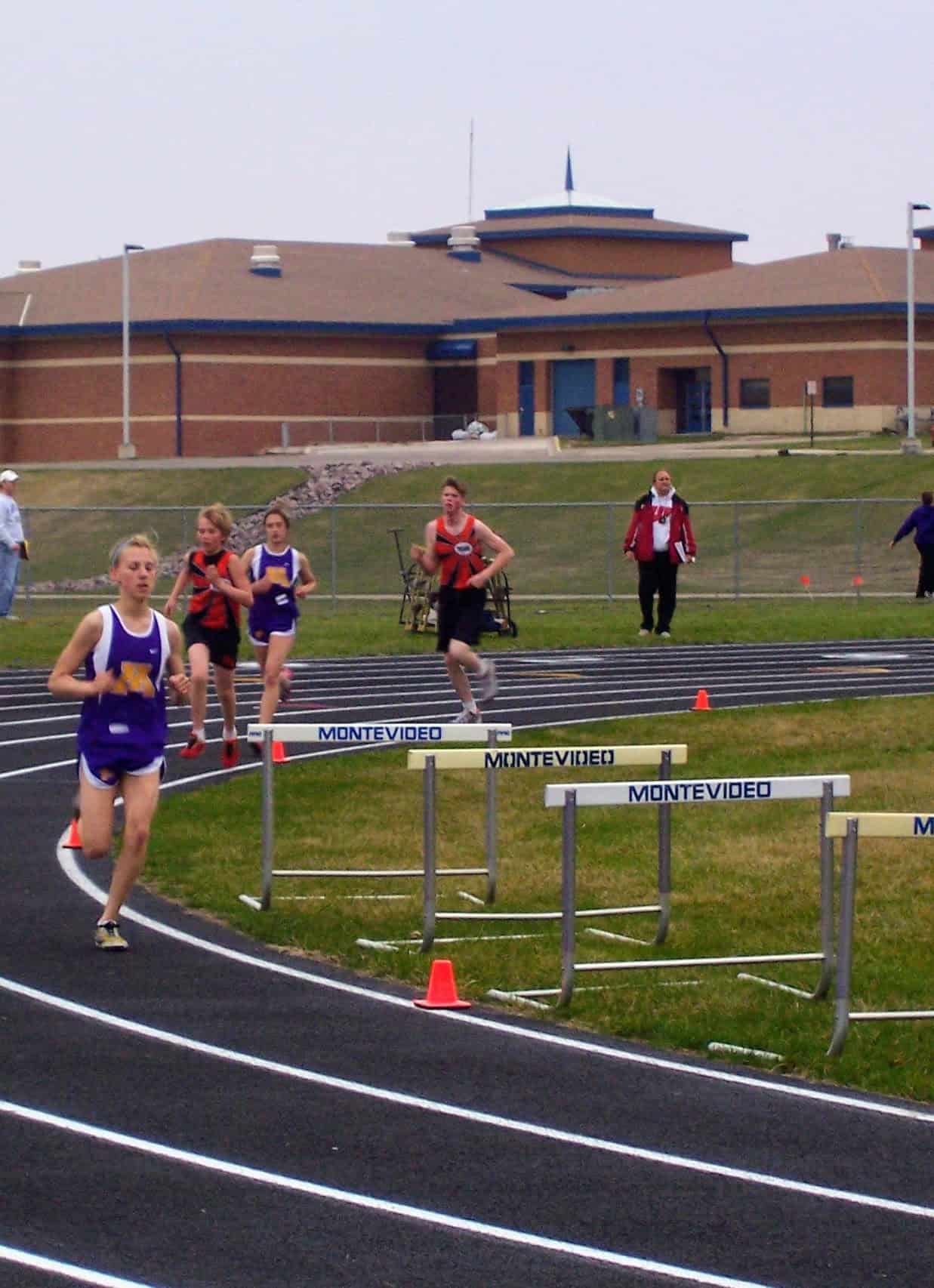
Over the past month, we’ve had the opportunity to return to our high school alma maters for “shoe drops,” supporting the Montevideo and Chisago Lakes track teams.
Each of us began our running journeys in 7th grade. Barely teenagers, we got our feet wet with relays and distance running- testing our limits, building team bonds, and learning the discipline required of student-athletes.
“Felt” (Todd Rietveld) and “Shim” (Dave Shimming) are still leading the way at Montevideo. Kate’s coaches back in 2009, they’ve spent more than two decades honing their craft. Listening to them share stories from across the years, you quickly realize it’s not just their coaching expertise that stands out- it’s their ability to connect, mentor, and understand their athletes.
At Chisago Lakes, Brandy Peterson has stepped into the role once held by my longtime coach, Ken Orwoll. She’s taken on the position with incredible energy. Alongside her head coaching duties this spring, she also picked up a full load of business classes when another teacher went on leave- a testament to the commitment educators and coaches bring every day.
As in most areas of life, sports are ultimately about people. Coaches help foster dedication, resilience, and community- traits that extend far beyond competition and into everyday life. I’d argue these are foundational to building strong citizens and healthy communities.
One of the unique strengths of track and cross country is the continuity athletes experience- from their first steps in middle school to their final races as seniors. Whether it’s the same coaching staff or a coordinated effort between programs, that consistency matters.
Mentorship is naturally built into the process. During our time coaching and teaching at Hopkins, we saw upperclassmen lead middle schoolers through warmups, cheer them on at races, and model the kind of character that helps guide younger athletes through some of their most formative years.
We don’t envy the difficult budget decisions school districts are facing right now. As former teachers, we’ve seen those challenges firsthand. When budgets tighten, there are no easy answers.
The current proposal by Stillwater schools to move middle school sports to community education may offer cost savings- but it’s hard to believe those savings won’t come with tradeoffs. Coaches already earn modest pay for the time they invest. Reduced bussing or increased participation fees could place added strain on families and limit access for some students.
Investing in youth sports should be a shared community priority. Preserving the connection between schools, coaches, and student-athletes is essential. If part of education’s mission is to develop well-rounded, engaged citizens, then ensuring access to quality athletics isn’t optional- it’s fundamental.